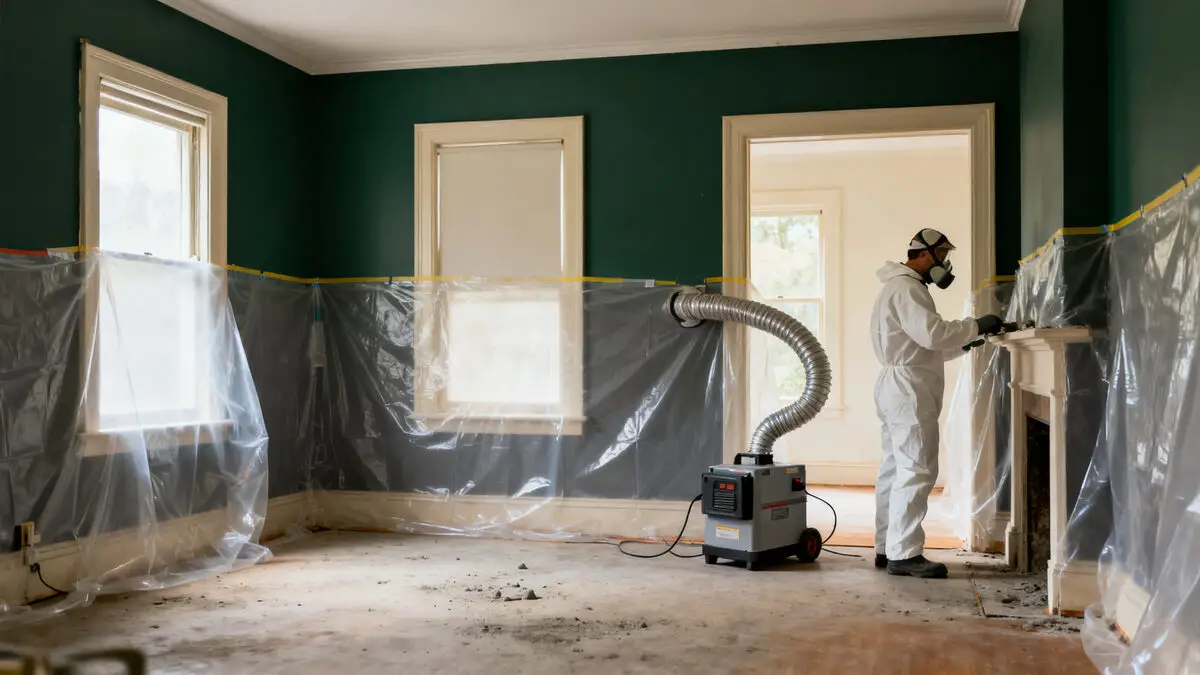
If you’re dealing with a suspect material in a Salinas home or commercial building — a popcorn ceiling, old floor tile, pipe insulation, textured plaster — there is exactly one way to know whether it contains asbestos: laboratory analysis of a physical sample. Not the age of the house, not how the material looks, not a contractor’s guess.
This page explains how professional asbestos testing works, when it’s legally required in the MBARD district, what it costs, and why testing first is the cheapest decision you’ll make on your project.
When Is Asbestos Testing Required in Salinas?
Testing moves from “smart” to “mandatory” the moment your project will disturb building materials. Salinas is in the jurisdiction of the Monterey Bay Air Resources District (MBARD), which enforces the federal asbestos regulation (the Asbestos NESHAP) across Monterey, Santa Cruz, and San Benito counties.
In practice, that means testing is required before:
- Renovations that disturb drywall, ceilings, flooring, insulation, stucco, or plaster — kitchen and bath remodels included
- Demolitions of any structure, from a detached garage to a commercial building — see our pre-demolition survey page for how the notification process works
- Repairs after damage — fire, flood, or a ceiling collapse that will require tearing out materials
Outside those triggers, testing is still the right call whenever suspect material is damaged, deteriorating, or about to be touched: crumbling pipe wrap in a basement, water-stained popcorn ceiling, tiles popping loose in a hallway.
Which Materials Should Be Tested?
Asbestos was used in an enormous range of building products, most heavily before 1980. In Salinas housing stock — much of it built in the postwar decades — the usual suspects are:
- Popcorn (acoustic) ceiling texture — see our dedicated popcorn ceiling page
- Vinyl floor tile and the black mastic adhesive under it — especially 9×9 inch tiles
- Drywall joint compound and wall texture
- Pipe and duct insulation — thermal system insulation is the highest-risk category
- Stucco, plaster, and acoustic plaster
- Roofing felts, shingles, and transite siding
- Vermiculite attic insulation
Newer buildings aren’t automatically clear. Some materials continued to contain asbestos after the 1970s, which is exactly why MBARD’s rules apply regardless of construction date.
How Professional Testing Works
A compliant test is more than grabbing a chip of ceiling and mailing it somewhere. Here’s the process a certified professional follows:
- Site walk-through. The inspector identifies every suspect material in the area your project will disturb — not just the obvious one. Missing a material now means a stopped project later.
- Physical sampling. Small samples are collected using wet methods and sealed containers, so sampling itself doesn’t release fibers. Sampling locations are documented.
- PLM laboratory analysis. Samples go to an accredited laboratory for Polarized Light Microscopy (PLM) — the standard method for identifying asbestos type and percentage in bulk building materials.
- Written results. You receive a report stating exactly which materials contain asbestos and at what concentration — the document that either clears your project or defines the abatement scope.
Who’s qualified to do this?
In California, asbestos consulting work is a state-certified specialty. Surveys and sampling for regulated projects are performed by a Certified Asbestos Consultant (CAC) or a certified site surveillance technician working under one — a certification issued through Cal/OSHA’s program. General contractors and home inspectors cannot produce a compliant asbestos survey, and MBARD will not accept one.
What Does Asbestos Testing Cost in Salinas?
Testing is priced primarily per sample, so your total depends on how many distinct suspect materials need analysis:
- A single material — one popcorn ceiling, one flooring type — is an inexpensive, fast test.
- A typical whole-house survey — ceilings, walls, flooring, insulation — involves multiple samples and generally lands in the several-hundred-dollar range.
- Rush laboratory turnaround adds cost but can save a closing date or permit deadline.
For where testing fits in the full project budget — and what removal actually costs if a test comes back positive — see our Salinas asbestos cost guide.
Why Testing First Saves Money
It seems counterintuitive, but the test is the budget’s best friend:
- Negative results delete abatement costs. Plenty of suspect materials come back clean. A few hundred dollars of testing can turn a feared five-figure abatement into an ordinary demolition.
- Positive results shrink the scope. Testing tells you which materials are contaminated, so you pay for removal of those — not blanket treatment of everything suspect. Untested materials must legally be assumed asbestos-containing, which is the most expensive assumption in construction.
- Clean paperwork keeps projects moving. MBARD notifications backed by a compliant survey sail through. Projects that skipped testing get stopped, cited, and re-scoped at crisis prices.
Testing During a Sale, Purchase, or Insurance Claim
Renovation isn’t the only trigger. Testing regularly comes up in Salinas real estate and insurance timelines:
- Buying a pre-1980 home. A general home inspection does not include asbestos analysis — inspectors will flag suspect materials but can’t confirm them. A targeted test during your inspection contingency tells you whether that popcorn ceiling or old flooring is a future abatement cost, which is negotiating information worth many times the lab fee.
- Selling. A clean lab report on the materials buyers always ask about removes a common source of escrow friction. A positive result doesn’t kill a deal either — it defines a scope and a price instead of leaving an open-ended fear.
- Insurance and damage claims. After water or fire damage, restoration contractors in the MBARD district will generally not tear out materials in an older home without test results in hand. Getting sampling done immediately keeps the claim and the repair timeline moving.
In every one of these situations the pattern is the same: the test converts an unknown liability into a known number.
Serving Salinas and All of Monterey County
We connect property owners in Salinas, Monterey, Seaside, Marina, Watsonville, Hollister, and throughout the MBARD district with certified asbestos professionals for testing, surveys, and removal — one call, and the right credentialed specialist handles your project from sample to clearance.