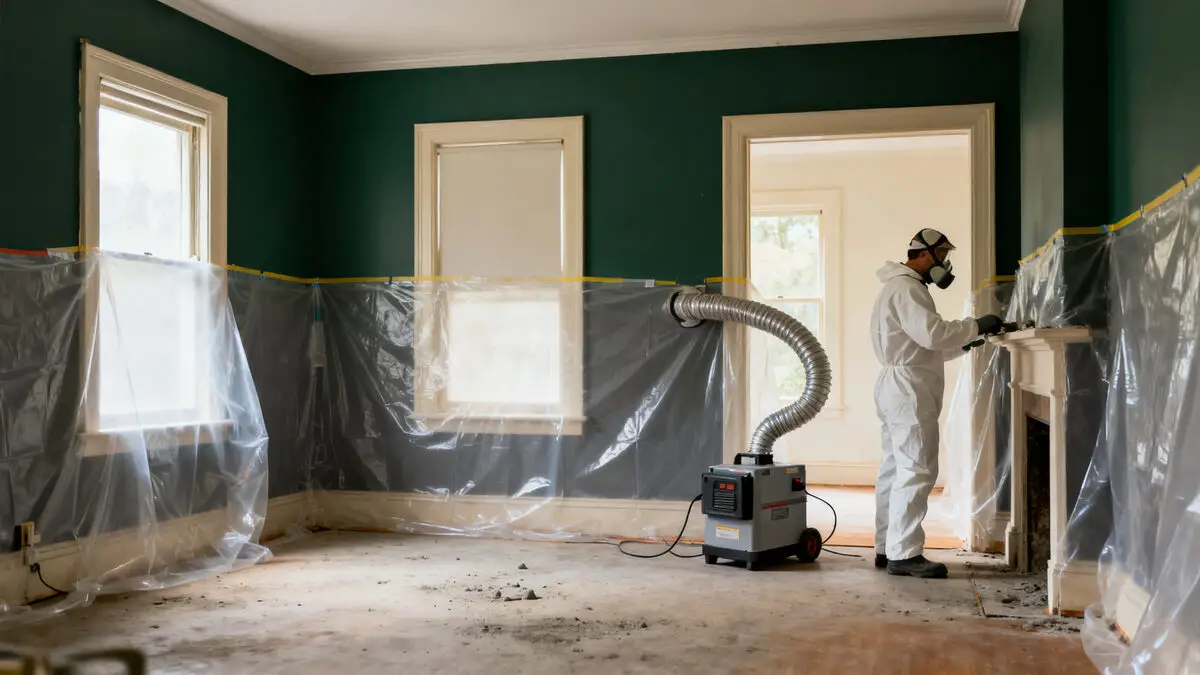
Asbestos rules in this region don’t follow city lines — they follow the air district. The Monterey Bay Air Resources District (MBARD) enforces the federal asbestos regulation across Monterey, Santa Cruz, and San Benito counties, which means one rulebook applies from Salinas to the coast and inland to Hollister: a survey before renovation or demolition, notification before demolition, and licensed abatement when asbestos is found. Wherever your property sits in the district, the process — and the standard we hold the professionals to — is the same.
Here’s how we serve each community, and what asbestos work typically looks like there. Details on the survey rule itself are on our pre-demolition survey page.
Salinas
Our home base, and the district’s largest city. Salinas has deep stock of pre-1980 housing — especially in the Alisal and the older neighborhoods around the city center — where popcorn ceilings, 9×9 floor tile, and original pipe insulation are routine finds during remodels. The surrounding Salinas Valley adds a category most areas don’t have: aging agricultural buildings, packing sheds, and processing structures where cement-asbestos panels and old insulation are common. From flooring tests in a single bedroom to pre-demolition surveys on ag structures, this is the work we see most.
Monterey
Monterey’s older housing and long-standing commercial and hospitality buildings mean renovation projects here regularly encounter original plasters, flooring, and insulation from the asbestos era. It’s also where MBARD itself is headquartered — projects in Monterey sit close to the regulator, and inspectors are not far from any job site. Coastal remodels, seismic and foundation work, and commercial tenant improvements are the common triggers for testing and surveys here.
Seaside
Much of Seaside was built out in the mid-century decades, squarely inside the years when asbestos-containing materials were standard in ceilings, flooring, and stucco. That makes routine remodels — kitchen and bath updates, flooring replacement, ceiling scraping — the typical reason Seaside homeowners need testing. If your home dates from that era and you’re planning work that disturbs original surfaces, test before you cut.
Marina
Marina combines mid-century housing with newer construction from the ongoing redevelopment of the former Fort Ord lands. The practical rule here: age alone doesn’t exempt anyone — MBARD requires a survey before renovation or demolition regardless of construction date — but older Marina homes and any remaining pre-conversion structures deserve particular caution before demolition or major remodeling.
Watsonville
Watsonville sits in Santa Cruz County — still inside the MBARD district, so the same survey and notification rules apply as in Salinas. Its older downtown housing, Victorians, and long agricultural history — packing houses, coolers, and processing buildings — make it one of the busier areas in the district for both residential testing and commercial or ag pre-demolition surveys.
Hollister
Hollister is in San Benito County, the third county under MBARD’s jurisdiction. Older homes around the historic downtown, plus ranch and farm structures throughout the county, are the typical projects here. Distance from the coast changes nothing about the rules: demolition notification and pre-work surveys apply in Hollister exactly as they do everywhere else in the district.
One District, One Standard
Whichever city your property is in, the sequence is identical: certified testing or survey first, lab-confirmed results, then licensed abatement only for materials that actually need it — priced honestly for the local market. If you’re anywhere in the MBARD district and unsure whether your project needs a survey, that’s a two-minute phone conversation.